Announcing a new F1 team is easy. Building one that can actually survive a season is the hard part. Cadillac and Audi both arrived on the 2026 grid as the sport’s two newest manufacturers, and now that roughly two-thirds of the season is in the books, there’s a real story to tell about how differently their debut years have actually gone.
A Historic Doubling of the Grid
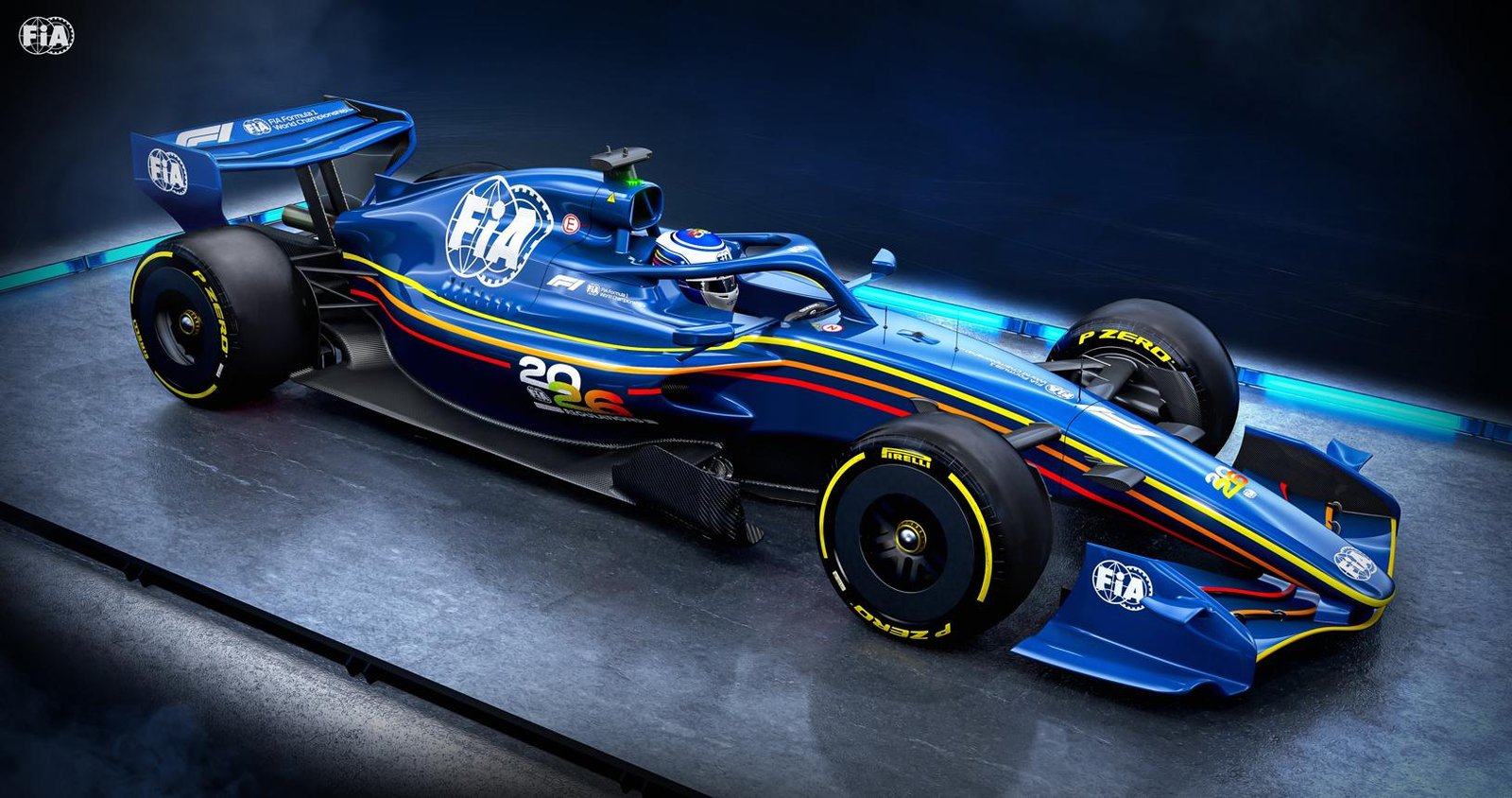
Cadillac’s arrival made it the first completely new, independent constructor to join Formula 1 since Haas in 2016, expanding the grid to 11 teams and 22 cars for the first time in a decade. Audi’s entry, meanwhile, came through the acquisition of the long-running Sauber outfit, a team that has competed in F1 since 1993, transforming it into the brand’s first-ever official works squad. Both projects were timed deliberately to coincide with F1’s biggest regulatory reset in years, since the new hybrid-heavy power unit rules were specifically designed, in part, to make the sport more attractive to outside manufacturers. On that score, at least, the plan worked. Whether either newcomer can turn that opportunity into results is a very different question.
Cadillac: America’s Team Takes Shape
The Build-Up
Cadillac’s road to the grid was anything but simple. The brand’s F1 ambitions were originally tied to a proposed Andretti-led entry that received FIA approval but was ultimately rejected by Formula One Management in early 2024. General Motors regrouped, and by late 2024 had agreed a fresh deal to enter under the Cadillac name directly, with backing from TWG Motorsports. The team now operates from four bases: three in the United States, in Fishers, Indiana; Concord, North Carolina; and Warren, Michigan; plus a British operation in Silverstone. Engine assembly work sits in North Carolina, while the actual power units come from Ferrari as a bridge, with GM’s own in-house engine not expected until 2029.
Running the operation is Graeme Lowdon, a veteran of the sport’s midfield from his time at Marussia. For drivers, Cadillac went straight for experience rather than gambling on an unproven rookie, signing Sergio Perez and Valtteri Bottas on multi-year deals. Between them the pair brought over 500 Grand Prix starts and 16 wins to a team that had never turned a competitive lap. IndyCar star Colton Herta joined as test driver, moving into FIA Formula 2 alongside the role, while Bottas’s former Sauber teammate Zhou Guanyu came on board as reserve driver.
How the Season Has Actually Gone
Three races in, Cadillac’s story was mostly about reliability. Perez brought the car home in all three opening Grands Prix plus a Sprint race, an unusually strong finishing record for a brand-new team. Bottas matched that in China and Japan but retired from the Australian season opener with a fuel system issue. The low point of the early season came in China, where Perez and Bottas collided with each other during the Grand Prix, an incident stewards ultimately ruled a simple racing incident, with both drivers apologizing afterward. Through those first three rounds, Cadillac had no championship points, but Bottas’s P13 finish in China offered a glimpse of where the car might eventually land.
The team’s home race in Miami brought a special one-off livery built around a 50-star front wing design, a Nike sneaker collaboration, and a genuinely strong on-track showing: Perez split the Aston Martins in both the Sprint and the Grand Prix, and both cars reached the finish for a third consecutive weekend. By the time the season reached Silverstone in July, roughly nine rounds in, Cadillac had brought its first significant upgrade package, introduced at the Austrian Grand Prix, and the results were starting to show. Bottas out-qualified an Alpine at Silverstone and sat within half a second of the slowest Haas, evidence the team was no longer simply making up the numbers at the back of the grid. Neither driver has scored a point yet, though Perez came agonizingly close in Monaco, initially classified as high as P10 due to penalties for other drivers before picking up a time penalty of his own.
Building Toward the Midfield
Both drivers have been consistent in describing the season as a long-term project rather than a personal campaign. Perez has talked about the team needing more raw speed before it can really mix it with the midfield, while Bottas has framed the progress itself as the reward, saying the improvement is “the carrot” that keeps him motivated. Lowdon, for his part, has praised the team’s execution and reliability gains, confirming further upgrades are already in the pipeline. Cadillac may not be scoring points yet, but the trajectory, and the reliability record that’s gotten them this far, suggests it’s a matter of when, not if.
Audi: Germany’s Long-Awaited F1 Return
The Build-Up
Where Cadillac built essentially from scratch, Audi took a different route: acquiring an existing, experienced operation in Sauber and layering its own identity and technology on top of it. That meant taking on Sauber’s Hinwil, Switzerland chassis factory, while building an entirely new power unit division, Audi Formula Racing, based in Neuburg an der Donau in Bavaria, plus an additional technology center in Bicester, England, aimed at attracting specialist talent from Britain’s dense motorsport industry. Revolut signed on as title sponsor. At its Berlin launch, Audi laid out a five-year plan explicitly aimed at competing for championships by 2030, a target that puts real pressure on the early seasons to show tangible technical progress.
For drivers, Audi kept the pairing that had carried Sauber through a strong 2025 campaign: Nico Hulkenberg, who finally picked up his first career podium at Silverstone in 2025 after 239 Grand Prix starts, and Gabriel Bortoleto, a rookie who arrived off the back of back-to-back Formula 3 and Formula 2 titles and immediately impressed with a P6 finish in Hungary during his debut season. The bigger story off-track came just two races into 2026, when founding Team Principal Jonathan Wheatley departed the team suddenly, with former Ferrari boss Mattia Binotto, already leading the wider Audi F1 project, stepping in to take over team principal duties as well.
How the Season Has Actually Gone
Audi’s on-track debut was, remarkably, a genuine highlight. Bortoleto qualified 10th in Melbourne and brought the car home in ninth, scoring Audi’s first-ever Formula 1 points in the team’s very first race, an outcome nobody inside or outside the team had realistically expected given the scale of building both a new chassis program and a power unit from zero simultaneously. The rest of the early season proved considerably tougher. In China, Bortoleto failed to start the race while Hulkenberg brought the car home just outside the points in P11. Japan brought more of the same, with Hulkenberg again finishing 11th, though he later admitted a poor start had cost him a shot at points, dropping from 13th on the grid to 19th at one stage in the race.
The team’s underlying pace, though, has remained a persistent story all season. Through the first six races, either Bortoleto or Hulkenberg finished in P11 on five separate occasions, with the other’s best result in the sixth race landing in P12, an unusually tight pattern that speaks to a car capable of running right at the edge of the points without quite getting there. Hulkenberg has been candid about where the shortfall lies: the chassis, he says, is genuinely competitive with the midfield, but the power unit, being built completely in-house for the first time, is losing real lap time, something team boss Binotto has estimated at more than a second per lap depending on the circuit. By the time the season reached Austria, Audi had been confirmed as the sixth-fastest package on the grid for that particular weekend, close enough to the points that both drivers described the result as reinforcing genuine progress even without the reward of a scoreboard finish.
Under F1’s rules requiring rookie drivers to run in a set number of practice sessions each year, Audi has also rotated young driver Paul Aron into Friday practice on multiple occasions, including a session in Barcelona where he outpaced Bortoleto by nearly a second, a reminder that development duties are running in parallel with the main race effort all season.
The Engine Gap Story
Binotto has been unusually open about the scale of the challenge, acknowledging that building a power unit from zero was always going to be difficult in year one, and that the team is now focused on both squeezing more from the current hardware, which is homologated and therefore limited in how much can change mid-season, and on mid- to long-term concepts for future engine generations. It’s a frank admission that stands in contrast to Cadillac’s approach of leaning on proven Ferrari power for now: Audi chose the harder, slower path of full technical independence from day one, betting that short-term pain will pay off against its stated 2030 championship ambitions.
Side by Side: How the Two Newcomers Compare
- Points scored: Audi has banked 2 championship points through the middle of the season, both from Bortoleto’s opening-race finish in Australia, while Cadillac remains at zero heading into the back half of the year.
- Power unit strategy: Cadillac is racing with proven, current-specification Ferrari engines as a bridge until GM’s own unit arrives in 2029, while Audi is running a brand-new, fully in-house power unit from its very first race, accepting an estimated second-a-lap deficit in exchange for long-term independence.
- Leadership stability: Cadillac has kept the same team principal, Graeme Lowdon, in place all season, while Audi lost founding boss Jonathan Wheatley just two rounds into its debut campaign, leaving project chief Mattia Binotto to run both roles.
- Driver strategy: both teams deliberately paired experience with a partner rather than fielding two unknowns, though Cadillac went for two proven race winners in Perez and Bottas, while Audi kept a veteran-and-rising-star mix in Hulkenberg and Bortoleto.
- Long-term ambition: Audi has publicly committed to a five-year plan targeting championship contention by 2030, while Cadillac’s public messaging has stayed more measured, framing progress in terms of reliability and incremental pace gains rather than a fixed championship deadline.
- Market strategy: Cadillac has leaned hard into its American identity, playing up its home races in Miami, Austin, and Las Vegas, while Audi’s story is built around German engineering heritage and a long-term technical roadmap.
Why This Matters for F1’s Bigger Picture
Two brand-new manufacturers surviving, let alone competing, in the same debut season is genuinely rare in modern F1, where the technical and financial barriers to entry have only grown steeper over time. Cadillac’s approval, coming after the Andretti-led bid’s very public rejection, is itself a notable turnaround for GM’s F1 ambitions. Audi’s arrival, layered on top of an already-experienced Sauber operation, shows a different but equally viable path: buy your way into existing infrastructure and then build out the pieces you don’t have. Between them, Cadillac and Audi also represent two different bets on how to handle the power unit side of F1’s new hybrid rules — lean on an established supplier now and build your own engine later, versus commit to full independence immediately and absorb the early performance cost. How each bet plays out over the next few seasons will likely shape how the next manufacturer considering an F1 entry decides to approach it.
What to Watch for the Rest of 2026
- Whether Cadillac’s Austria upgrade package continues to close the gap to established midfield teams like Alpine and Haas, potentially delivering the team’s first points before the season ends.
- Whether Audi can finally convert one of its repeated near-misses into an actual points finish, given how often the car has qualified and raced within touching distance of the top 10.
- Who Audi ultimately appoints as a permanent team principal, following Mattia Binotto’s dual role since Jonathan Wheatley’s sudden departure.
- Whether Cadillac’s bridge strategy with Ferrari power evolves at all before GM’s own engine arrives in 2029, or whether the team simply focuses on chassis development in the meantime.
- The unofficial battle for bragging rights between F1’s two newest teams, since neither has been shy about acknowledging they’re watching the other’s progress closely.
The Bottom Line
Cadillac and Audi didn’t just join the F1 grid this year, they’ve spent the first two-thirds of the season proving, in very different ways, what it actually takes to build a competitive team from a standing start. Audi’s fast, points-scoring debut has given way to a season of frustratingly close misses shaped by a power unit built entirely from scratch. Cadillac’s slower, more incremental climb has been built on rock-solid reliability and a steadily shrinking gap to the midfield. Neither team has cracked the points table consistently yet, but both have shown enough in year one to suggest the rest of the grid should be paying attention.
#F1 #Cadillac #Audi #F12026 #newteams #motorsport